The city read from a distance
Ypsilanti announces itself in layers. Before you reach its streets, before the brick storefronts and the river crossings resolve into particulars, three or four things lift above the treeline and tell you where you are.
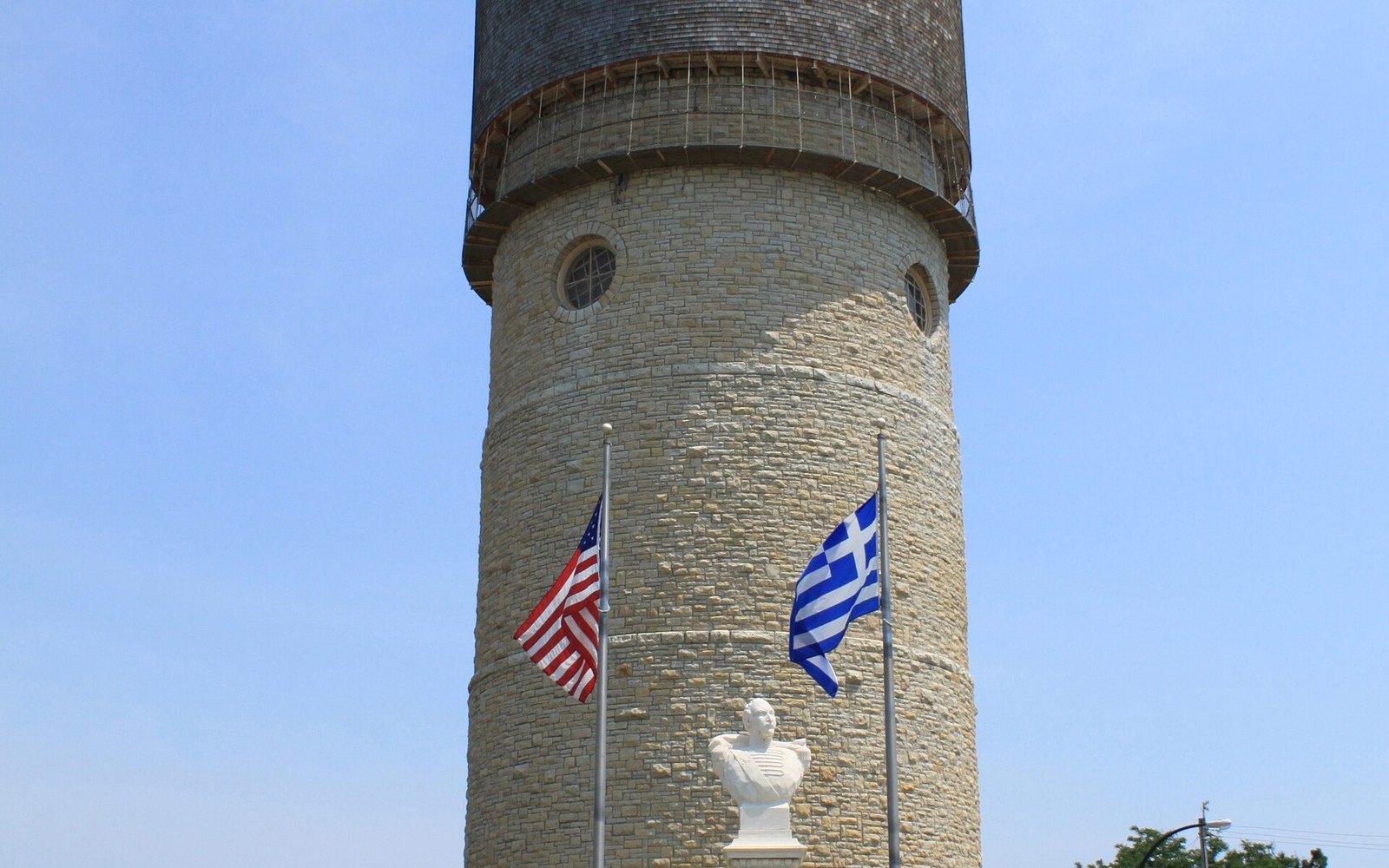
The Ypsilanti Water Tower is the most famous of them — a Romanesque Revival standpipe on a hill above the town, built of brick and stone in the late nineteenth century. Its silhouette is unmistakable from almost any approach, and it has been the subject of a certain civic joke for as long as locals can remember. What it actually is, beneath the ornamental stonework, is a functional pressure vessel — a column of water held at height so the grid below maintains steady flow. The form follows the engineering. The jokes are the city's own business.
The EMU water tower, plainer and taller, marks the campus to the south. It orients you differently — less landmark than vertical marker, useful to the eye rather than memorable to it. Between them, the two towers triangulate a good portion of the city's navigable space.
Then there is the steeple of the First United Methodist Church on North Huron, tall enough to read from the river corridor and from the Depot Town side of the water. Church spires did this work long before towers — they were the original waypoints of a walking city — and this one still functions that way even for people who have never entered the building.
Last is the smokestack at the old Peninsular Paper site, east of the Cross Street Bridge at the Frog Island bend. It no longer smokes. The industrial complex it once served has mostly come down. But the stack persists as a kind of skyline stub — useful precisely because it marks a place that was once major and is now ambiguous, which is as honest an account of Ypsilanti's industrial past as you could ask of a chimney.
None of these landmarks is decorative in origin. The water tower held pressure. The smokestack carried combustion exhaust. The church spire was theology made vertical and visible. What they share is height achieved for a reason — and the secondary effect that anyone moving through the city can use them to stay found.
Ypsilanti is not a large city. You can learn it quickly. But the landmarks help you learn it faster, and they reward the habit of looking up before you look around.
A short stop, deliberately. It belongs to Landmarks, where the longer pieces are.
Keep reading