The edge of the commercial district, and what lies just past it
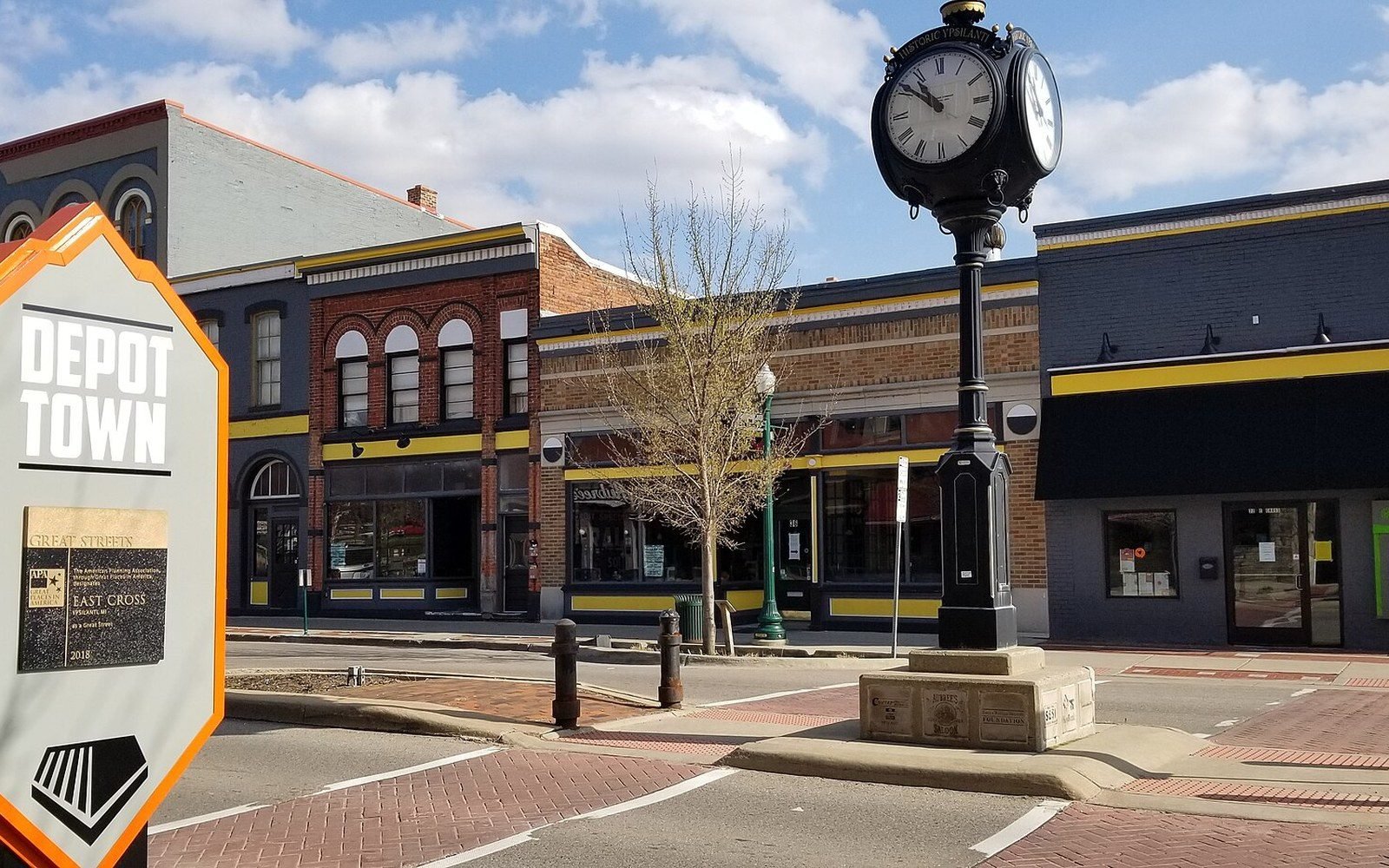
Depot Town's brick fronts face the main corridor — the storefronts, the cornices, the corbelling picked out against the sky. Turn a corner, though, and the grammar changes fast.
Within half a block of the commercial strip, brick gives way to wood frame. The transition is abrupt enough to feel architectural rather than accidental: here is where the merchant's investment ended and the residential neighborhood began. The houses that back up against Depot Town's rear lots are mostly late-nineteenth and early-twentieth-century workers' vernacular — front-gabled, clapboarded, set on modest lots that were never meant to be impressive. Some have been maintained with care; others carry their age plainly. Neither fact is the point. What matters is that they survived, which is not guaranteed in a city that has weathered serious economic pressure.
The streets running perpendicular to the river corridor — north from the main strip toward the neighborhoods above — tell the same story in their surfaces. Some retain brick paving beneath patched asphalt, a reminder that the streetscape was once continuous from commercial core to residential edge. When maintenance budgets could no longer justify the upkeep, asphalt covered what brick had been.
The Huron River closes the south edge; the neighborhoods press in from the north. Depot Town sits between them as a kind of seam — the point where the logic of commerce (stone, brick, permanence, display) hands off to the logic of habitation (wood, practicality, the expedient repair). That seam is readable in an afternoon's walk, if you're willing to leave the storefronts and go looking at what the district backs up against. The alleys are worth it. So are the rear lots, with their odd outbuildings and the occasional brick wall that once faced a neighbor's yard.
A short stop, deliberately. It belongs to Depot Town & the Streets, where the longer pieces are.
Keep reading